Office du Tourisme de Mārara Mārara Island Tourist Office
Langue / Language
Office du Tourisme de Mārara Mārara Island Tourist Office
Contour du logo Mārara
L'île du Pacifique qui échappe à toutes les cartes The Pacific island that slips off every map

ʻIa ora na
e manuia
à Mārara
ʻIa ora na
e manuia
à Mārara

Ici, les poissons volants prennent le vent comme des cerfs-volants, le Lac aux Vagues respire, et le groupe 1515 s’y présente fièrement comme l’ambassadeur de l’île.

Here, flying fish catch the wind like kites, the Wave Lake breathes in and out, and the band 1515 proudly acts as the island’s unofficial ambassador.

Conditions actuelles
Condition actuelle Current conditions
24° — vents d’est, rafales de marara 24° — east winds, Marara gusts
Rituel à venir
Rituel à venir Upcoming ritual
Procession des marionnettes-poissons Flying-fish puppet parade
Ambiance nocturne
Ambiance nocturne Night atmosphere
Nuits classées « Taravana » Nights classified as “Taravana”

Géographie de l'île Island geography

Voici quelques étapes incontournables de votre séjour.

Here are a few essential stops during your stay on the island.

Infinite beach Infinite beach
Infinite beach

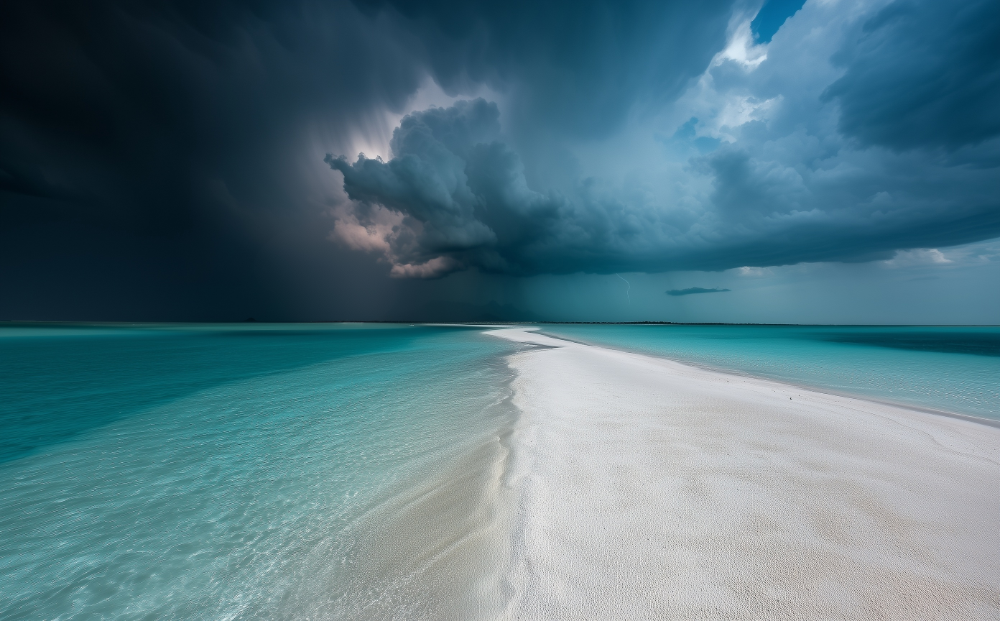
À la pointe ouest de l’île, cette longue étendue de sable blanc, semble s’incliner doucement dans l’océan, évoquant l’une des nageoires du poisson-volant que dessine les contours de l’île. Ce lieu, bien que idyllique, est peu fréquenté par les habitants de Mārara en raison de sa réputation mystique : il serait un passage pour les âmes en quête d’au-delà. Les anciens affirment que le murmure des vagues sur le rivage contient l’écho des derniers souffles des disparus.

At the western tip of the island, this long stretch of white sand appears to slope gently into the ocean, evoking one of the wings of the flying fish that outlines the island’s contours. This place, though idyllic, is rarely visited by Mārara’s residents due to its mystical reputation: it is said to be a passage for souls seeking beyond. The elders claim that the murmur of the waves on the shore echoes the last breaths of the departed.

Are atomi Are atomi
ARE ATOMI

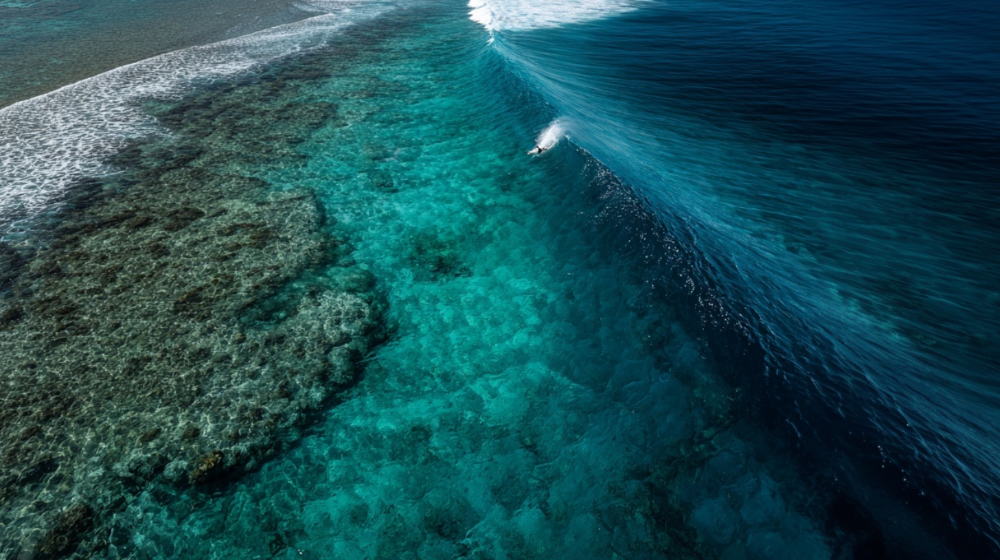
Surnommée “la Zone” par les surfeurs de l’île, la passe de Are Atomi se trouve à l’extrémité sud de la baie de Pānanu. Un courant singulier y sculpte une vague d’apparence presque figée, comme suspendue dans le temps. Jadis, une houle d’origine surnaturelle — née des tirs nucléaires dans un atoll voisin — façonna ce lieu hors du commun. C’est de cette étrange mémoire que la passe et sa vague tirent leur nom.

Known as “The Zone” by the island’s surfers, the Are Atomi pass is located at the southern end of Pānanu Bay. A singular current sculpts an almost frozen-in-time wave here. Once, a supernatural wave — born from nuclear detonations in a neighboring atoll — shaped this extraordinary place. It is from this mysterious memory that the pass and its wave derive their name.

Luya le quartier Luya neighborhood
luya quartier

Des ruelles étroites qui sentent le bois mouillé, la fumée douce et le sel. Les maisons sont basses, proches les unes des autres, comme si elles se protégeaient du vent. Ici, rien n’est vraiment droit : les clôtures penchent, les toits sont rapiécés, et les câbles dessinent au-dessus des têtes une écriture nerveuse. On raconte enfin une chose sur Luya : la nuit, le vent ne vient pas du large. Il vient de l’intérieur, comme si le quartier respirait

Narrow streets that smell of wet wood, smoke, and salt. The houses are low, close to each other, as if they were protecting themselves from the wind. Here, nothing is really straight: fences lean, roofs are thatched, and wires draw a nervous writing above the heads. Finally, we can tell you one thing about Luya: at night, the wind doesn’t come from the sea. It comes from the inside, as if the neighborhood were breathing.

Le lac aux vagues The Wave Lake
Le lac aux vagues

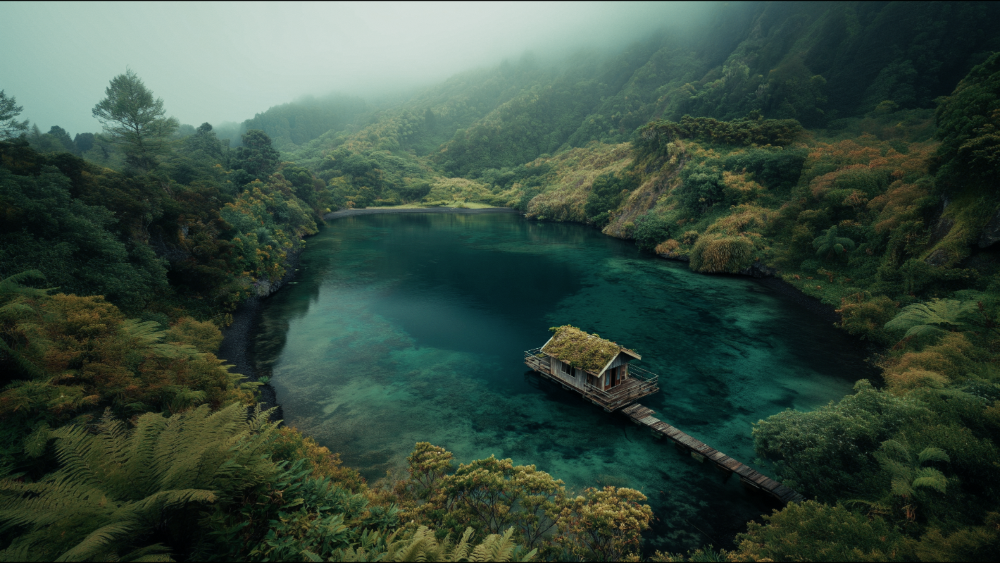
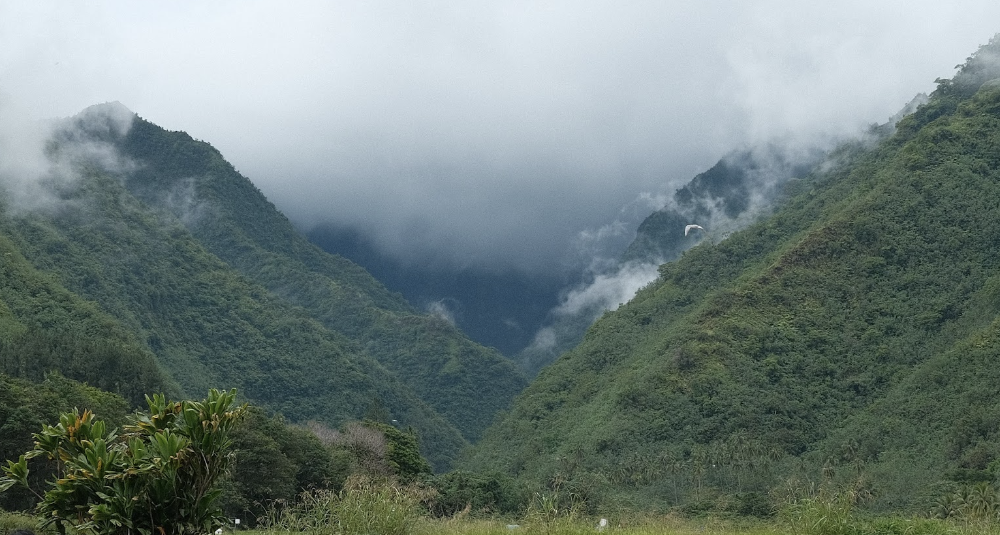
Au centre de Mārara s’élève le mont TARAVANA, vestige du volcan éteint qui donna naissance à l’île. En son cratère repose un lac d’eau salée surnommé le LAC AUX VAGUES. Un courant mystérieux y crée des ondulations continues à la surface, alimentant les légendes locales. Flottant au cœur de ce lac, un îlot abrite la maison royale, reliée au rivage par un pont qui mène au village principal en passant par le Marae royal de Ataheva, lieu de cérémonies et de rassemblements ancestraux.

In the center of Mārara stands TARAVANA Mountain, the extinct volcano that gave birth to the island. In its crater rests a saltwater lake known as THE WAVE LAKE. A mysterious current creates continuous undulations on the surface, fueling local legends. Floating in the center of this lake, an island houses the royal residence, connected to the shore by a bridge leading to the main village, passing through the royal Marae of Ataheva, a place of ceremonies and ancestral gatherings.

Fa’ama te uira Fa’ama te uira
Fa'ama te uira

Au fond, la terre est noire, humide, comme si elle avait brûlé sans finir de refroidir. Les arbres y poussent plus bas, plus denses, leurs feuilles tremblent avant même que l’orage arrive. C’est là que l’île fait son bruit secret : un bourdonnement continu, presque inaudible, qui te prend dans les dents. Les anciens disent que ce n’est pas le tonnerre — c’est Marara qui charge

At the bottom, the earth is black, wet, as if it had burned without ever cooling down. The trees grow lower, denser, their leaves trembling before the storm even arrives. It is here that the island makes its secret noise: a continuous hum, almost inaudible, that catches you in the teeth. The elders say it’s not thunder — it’s Marara charging.

Marina PMS Marina PMS
marina PMS

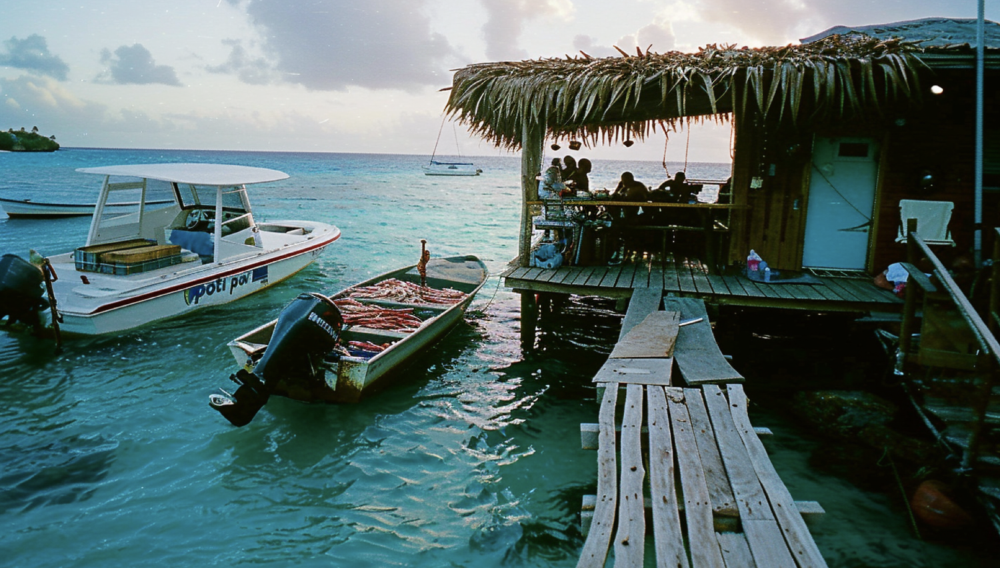
La Marina PMS est un port de plaisance et de pêche situé à l’extrémité sud de l’île. Il est connu pour son eau transparente et sa faune marine riche. Les plages de sable fin et les belles eaux en font un endroit idéal pour la baignade et la pêche.

The Marina PMS is a pleasure and fishing port located at the southern end of the island. It is known for its transparent water and rich marine fauna. The fine sand beaches and beautiful waters make it an ideal place for swimming and fishing.

Nuage-station Mārara Mārara Cloud Station
Nuage-station au-dessus de l’île

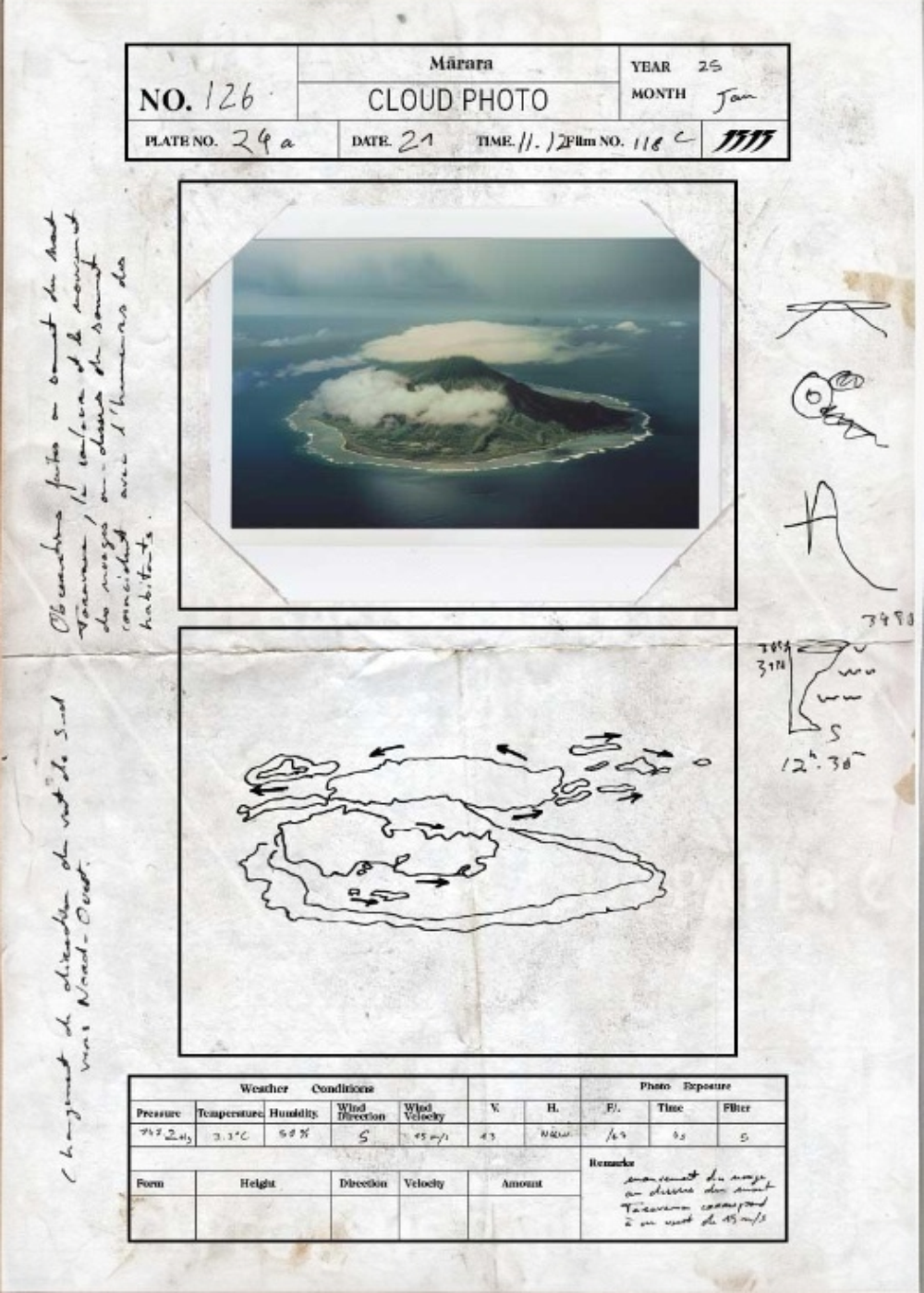
Au-dessus de l’île flotte un nuage qui ne retombe jamais. On dit qu’il abrite une station d’observation où les oiseaux viennent déposer les nouvelles du large.

Above the island hangs a cloud that never falls. Locals say it hides an observation station where birds come to drop off news from the open ocean.

Chapel Fifteen — Studio des 1515 Chapel Fifteen — 1515’s studio
Chapel Fifteen, studio de 1515

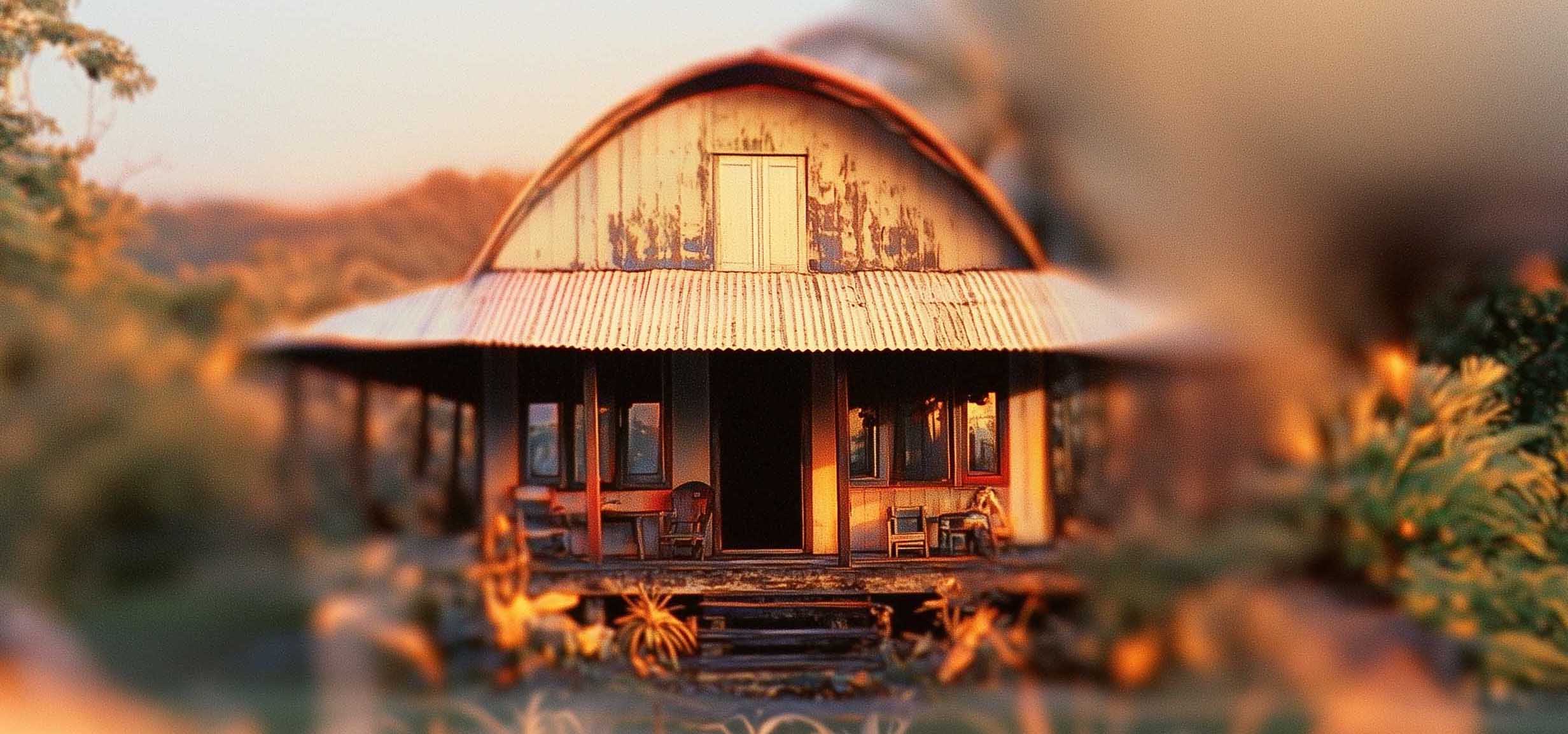
Ancienne petite chapelle reconvertie en studio d’enregistrement. C’est ici que 1515 capte les rumeurs de Mārara pour les transformer en morceaux, films et archives.

A small former chapel turned recording studio. This is where 1515 captures Mārara’s rumours and turns them into tracks, films and archival material.

traditions mārare’a Mārara traditions

expériences à vivre

Experiences to live

Hamani ma’au Hamani ma’au
Hamani ma'au

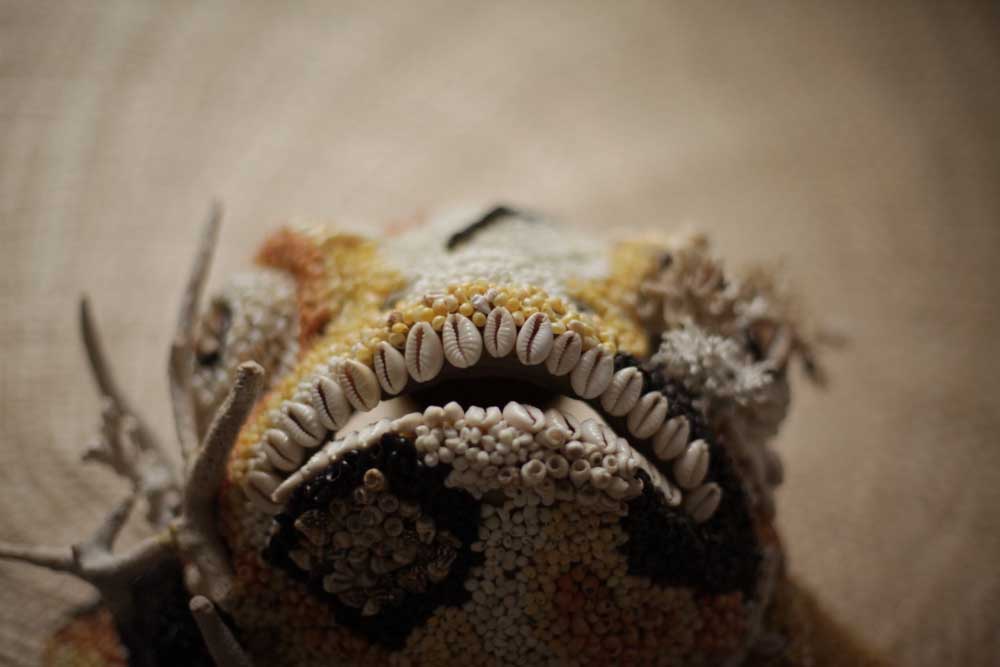
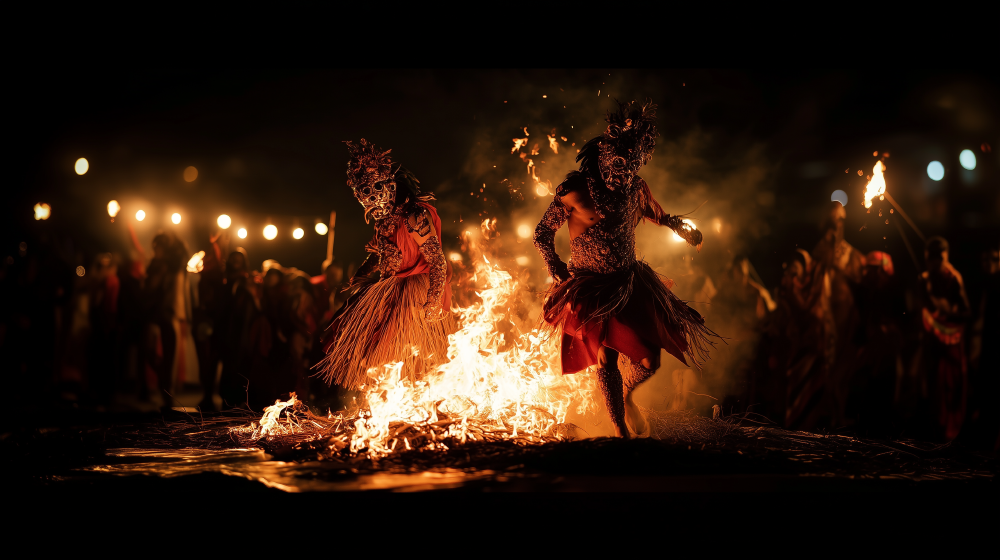
Les masques sont appelés Pō Ma’au sur Mārara. Leur fabrication porte le nom de hāmani ma’au. Bien qu’ils puissent aujourd’hui être confectionnés avec des matériaux variés, ils étaient traditionnellement réalisés à partir de morceaux de bois et de branches et décorés de coquillages. Autrefois, ces masques étaient portés par les tahua lors de leurs voyages dans le monde spirituel, le Pō. Ils servaient à dissimuler l’identité du porteur aux esprits, lui permettant ainsi de revenir dans le Ao — le monde des vivants — sans être suivi par eux. Pendant le taravana, le rituel de Marara, on porte des masques afin d’attirer les esprits bienveillants et de garantir l’abondance de nourriture. Au cours de la cérémonie, on utilise le Uto pour communiquer avec le monde spirituel. Cependant, cet outil ne permet pas de contrôler les esprits ni d’empêcher que certains nous suivent dans le monde réel après la cérémonie, notamment des esprits malveillants. C’est pourquoi on porte les Pō Ma’au : ils servent à se protéger et à canaliser correctement les présences spirituelles. Le Tahu’a, celui qui mène la cérémonie, porte un de ces masques et exécute une danse appelée ‘Ume destinée à attirer les esprits favorables autour de la fête qui célèbre l’abondance. Si la danse est correctement réalisée, c’est un signe de bon augure. En revanche, si elle est mal exécutée, elle peut attirer des esprits néfastes, ce qui est perçu comme un mauvais présage. On dit que le tahu’a a fa’aoha, c’est-à-dire qu’il a attiré les mauvais esprits.

The masks are called Pō Ma’au on Mārara. Their production is called hāmani ma’au. Although they can now be made from various materials, they were traditionally made from pieces of wood and branches and decorated with shells. In the past, these masks were worn by the tahua during their spiritual journeys in the world of the Pō. They served to hide the identity of the wearer from the spirits, allowing them to return to the Ao — the world of the living — without being followed by them. During the taravana, the ritual of Marara, masks are worn to attract the friendly spirits and ensure food abundance. During the ceremony, the Uto is used to communicate with the spiritual world. However, this tool cannot control the spirits or prevent them from following us in the real world after the ceremony, especially malevolent spirits. That is why we wear the Pō Ma’au: they serve to protect and properly channel the spiritual presences. The Tahu’a, the one who leads the ceremony, wears one of these masks and performs a dance called ‘Ume intended to attract the favorable spirits around the feast celebrating abundance. If the dance is performed correctly, it is a sign of good luck. However, if it is performed incorrectly, it may attract negative spirits, which is perceived as a bad omen. It is said that the tahu’a has fa’aoha, that is to say that he has attracted the bad spirits.
Unahi te poa Unahi te poa
Unahi te poa

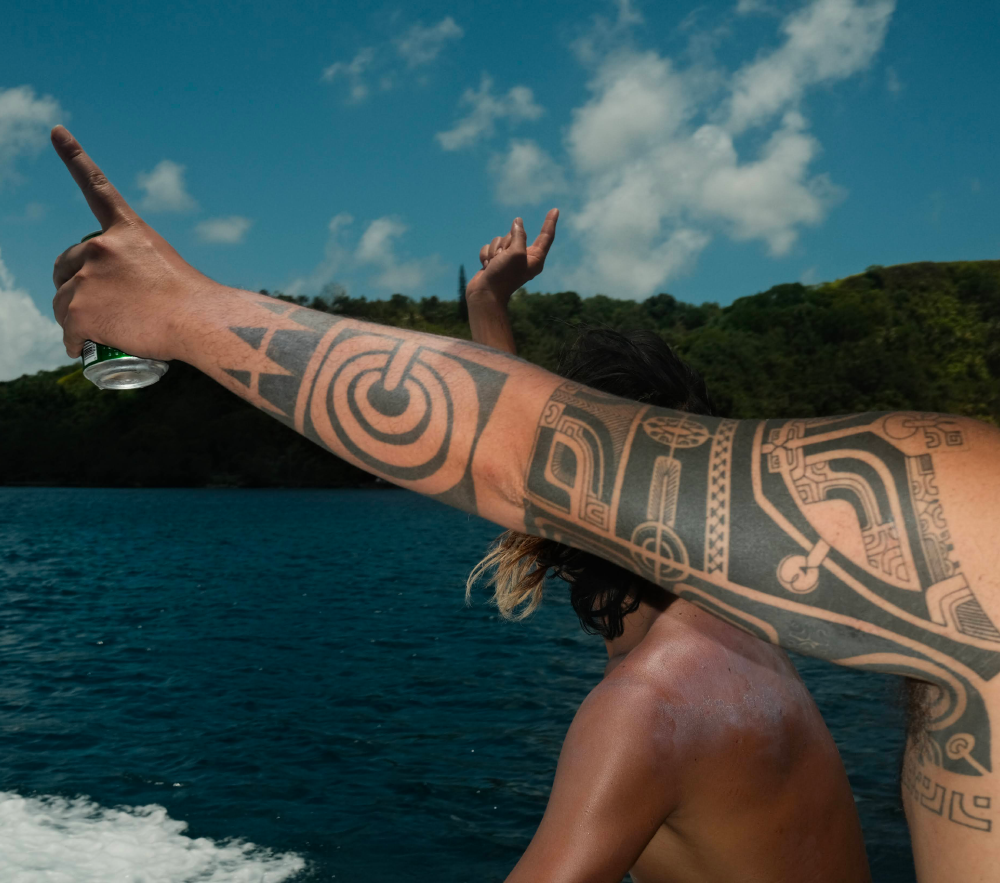
Unahi te poa n’est pas un tatouage “décoratif”. Sur Marara, on dit que c’est une seconde peau de mémoire : un texte sans alphabet, cousu dans la chair pour que l’île puisse te reconnaître même quand tu mens.

Unahi te poa is not a decorative tattoo. On Mārara, it is said to be a second memory skin: a text without alphabet, sewn into the flesh so that the island can recognize you even when you lie.

Le fāfaru The fāfaru
Le fāfaru

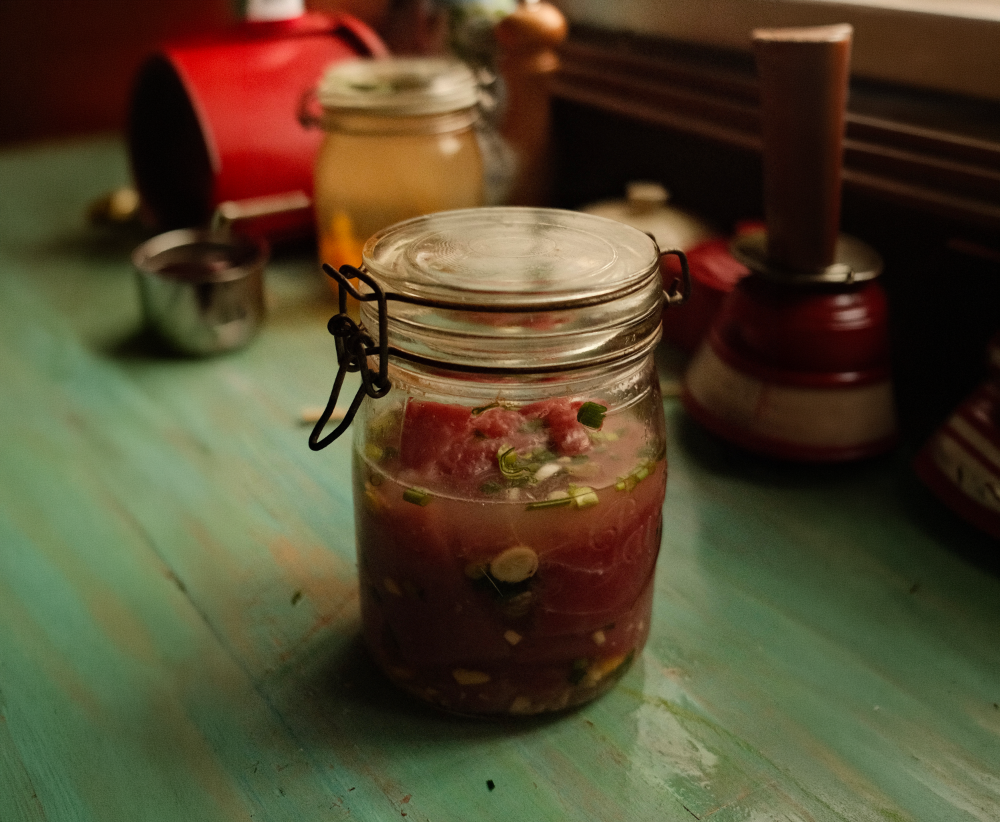
Comme on dit chez nous : “Tous dans le même bocal… de fāfaru!” La préparation du fāfaru marque l’ouverture du festival du Taravana. Ce rituel culinaire, essentiel aux festivités, commence plusieurs jours à l’avance car l’eau de mer doit longuement fermenter avant d’y plonger le poisson-volant pour le faire macérer. Au petit matin, les pêcheurs reviennent de leur nuit en mer. La communauté se retrouve à la marina — on nettoie, on découpe, on prépare les poissons dans la bonne humeur. Les anciens en profitent pour apprendre aux plus jeunes une vieille comptine, retraçant les étapes de la préparation. Les enfants la reprennent en chœur, imitant les tontons et les tatie de Luya, le quartier.

As we say: “All in the same jar… of fāfaru!” The preparation of fāfaru marks the opening of the Taravana festival. This culinary ritual, essential to the festivities, begins several days in advance because the sea water must ferment for a long time before it is placed in the flying fish to make it soak. In the morning, the fishermen return from their night at sea. The community gathers at the marina — we clean, we cut, we prepare the fish in good humor. The elders take the opportunity to teach the younger ones an old song, recounting the steps of the preparation. The children take it up in chorus, imitating the tontons and the tatie of Luya, the neighborhood.

Les bois flottés Les bois flottés
Les bois flottés

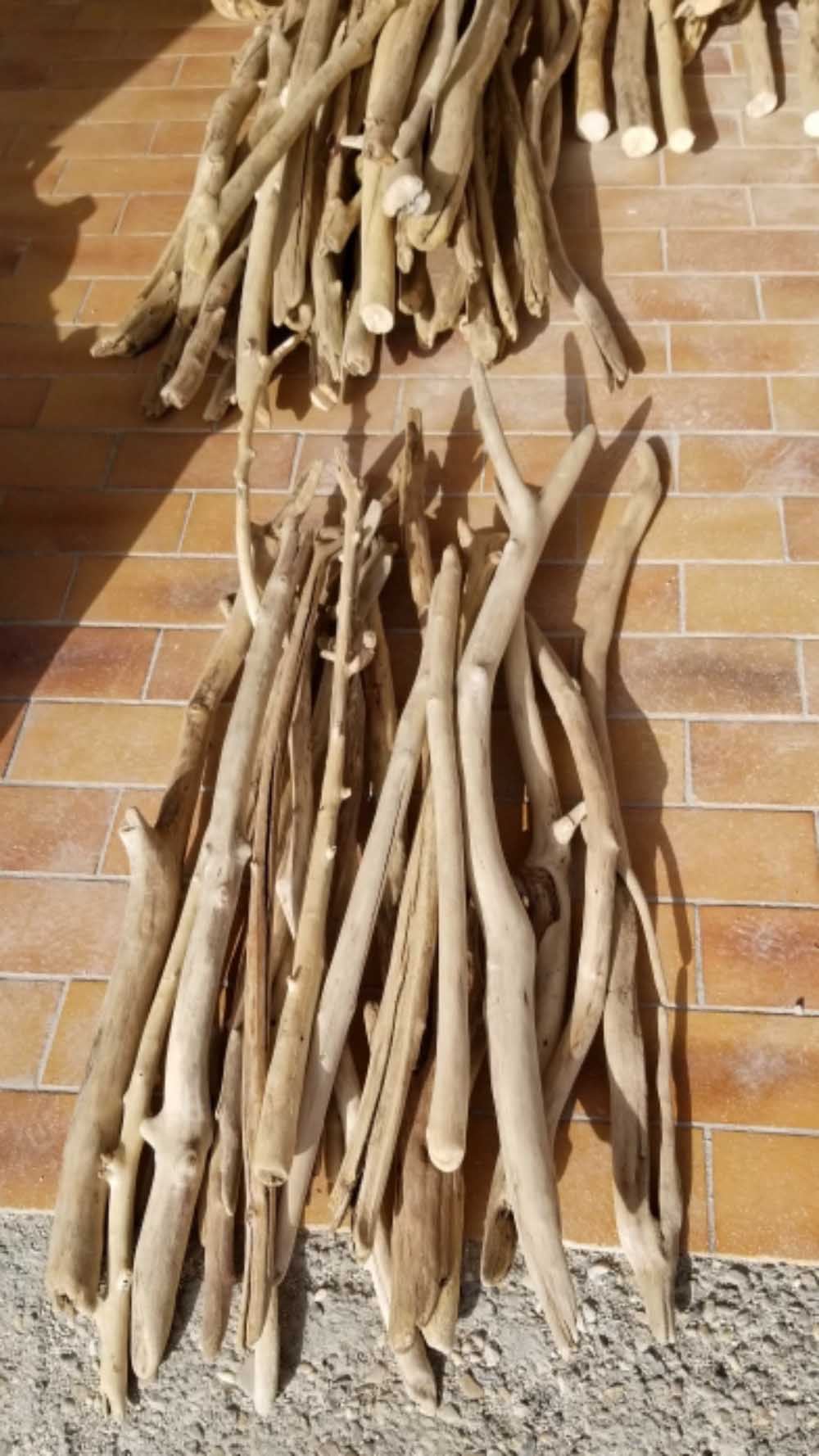
Chaque visiteur laisse tomber un morceau de bois dans les eaux sombres. Quand le bois se met à cogner entre les autres, le son « boom-boop » annonce que l'île vous a reconnu.

Each visitor drops a piece of wood into the dark waters. When it starts knocking against the others with a “boom-boop” sound, it means the island has recognised you.

Matarii i ni’a Matarii i ni’a
Matarii i ni'a

Pendant le Taravana, fête de l’abondance — aussi appelée Matari’i i ni’a — les festivités s’ouvrent par un rite cérémoniel nommé Umeume. Le tahu’a, maître de cérémonie, porte un masque et exécute la danse sacrée ‘Ume, destinée à attirer les esprits bienveillants et à assurer prospérité et abondance pour le cycle à venir. À ses côtés, une seconde personne, également masquée, l’assiste durant la danse. L’intensité de l’effort peut plonger le tahu’a dans un état de narcose, une véritable ivresse des profondeurs ; l’assistant veille alors sur lui. La population, elle aussi masquée, renforce symboliquement la puissance du rite et soutient l’énergie déployée lors de la cérémonie. On dit que si la danse est correctement réalisée, c’est un signe de bon augure. En revanche, si elle est mal exécutée, elle peut attirer des esprits néfastes, ce qui est perçu comme un mauvais présage. On dit que le tahua a fa’aoha, c’est-à-dire qu’il a attiré les mauvais esprits

During the Taravana, the feast of abundance — also called Matari’i i ni’a — the festivities begin with a sacred ritual called Umeume. The tahu’a, master of the ceremony, wears a mask and performs the sacred dance ‘Ume, intended to attract the friendly spirits and ensure prosperity and abundance for the coming cycle. By his side, a second person, also masked, assists during the dance. The intensity of the effort can plunge the tahu’a into a state of narcosis, a true intoxication of the depths; the assistant then watches over him. The population, also masked, symbolically reinforces the power of the rite and supports the energy deployed during the ceremony. It is said that if the dance is performed correctly, it is a sign of good luck. However, if it is performed incorrectly, it may attract negative spirits, which is perceived as a bad omen. It is said that the tahu’a has fa’aoha, that is to say that he has attracted the bad spirits.

Le uto The uto
Le uto

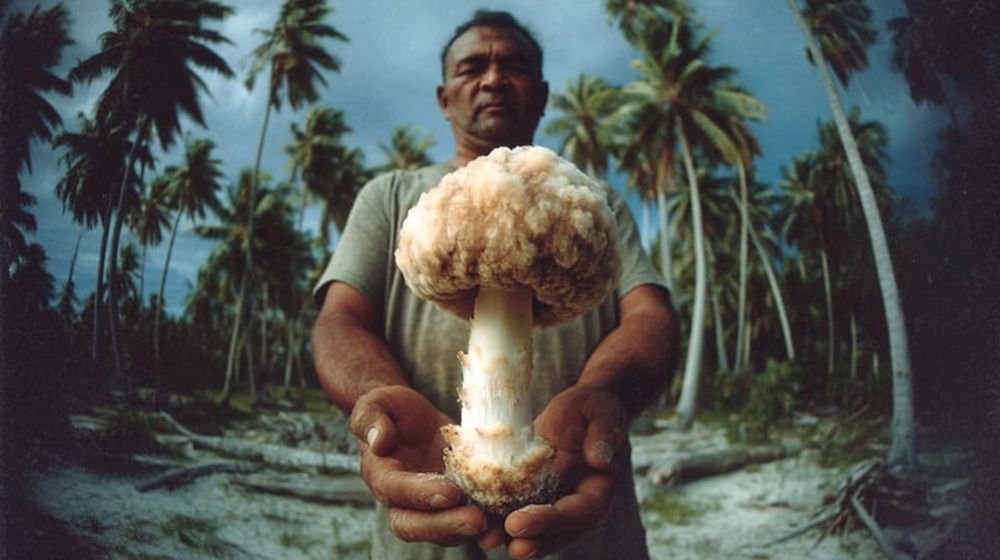
Sur l’île de Mārara, on trouve ce qu’on appelle le uto. Dans le reste de la Polynésie française, ce terme désigne normalement la germe du coco, une matière spongieuse située à l’intérieur de la noix de coco. Mais à Marara, il existe une variété particulière : un organisme qui pousse directement au sol, sans coquille ni noix, et qui ressemble davantage à un champignon. Ce fruit — ou champignon — est utilisé pour communiquer avec le monde des esprits, non pas pour interagir avec eux, mais pour augmenter la perception de celui qui l’ingère. Le uto confère une acuité spirituelle qui permet de voir les esprits de la nature, les esprits des morts, et d’autres présences invisibles. Aujourd’hui, le uto est consommé de manière assez courante sur l’île. Mais dans les temps anciens, il était surtout utilisé par les Tahu’a, les maîtres de cérémonie ou sorciers de l’époque, qui s’en servaient lors de rituels.

On the island of Mārara, there is what is called the uto. In the rest of French Polynesia, this term normally refers to the germ of the coconut, a spongy matter located inside the coconut shell. But on Marara, there is a special variety: an organism that grows directly on the ground, without shell or nut, and which resembles a mushroom more than a coconut. This fruit — or mushroom — is used to communicate with the spirit world, not to interact with them, but to increase the perception of the one who ingests it. The uto gives spiritual acuity that allows one to see the spirits of nature, the spirits of the dead, and other invisible presences. Today, the uto is consumed fairly commonly on the island. But in ancient times, it was mainly used by the tahu’a, the masters of the ceremony or sorcerers of the time, who used it during rituals.

Événements culturels Cultural events

Les festivités de Mārara mêlent réalités géographiques et mythes locaux. Voici quelques événements culturels incontournables de votre séjour.

Mārara’s festivals blend geography with local myths. Here are a few cultural events essential during your stay on the island.

Le Festival de Taravanara'a Taravanara'a Festival
Procession de poissons volants à Mārara

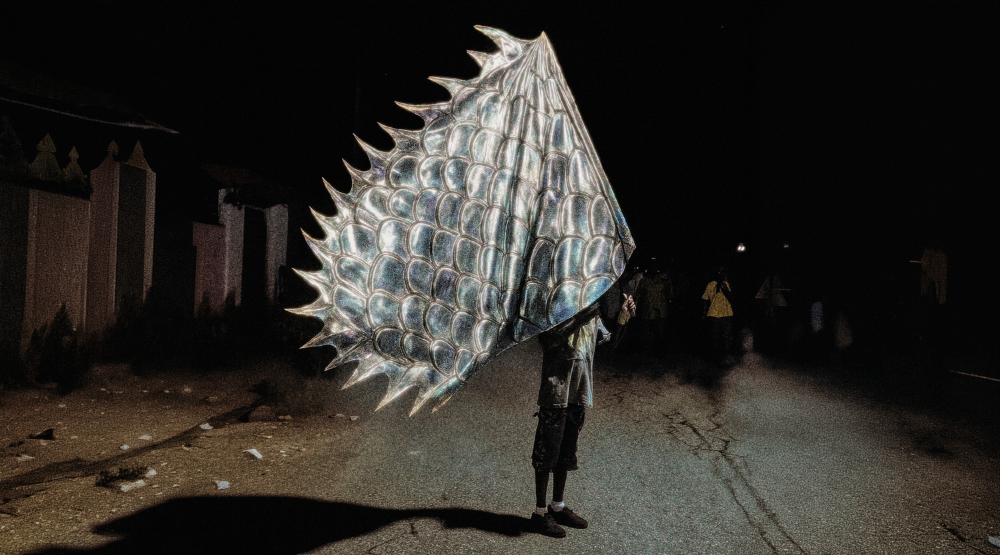
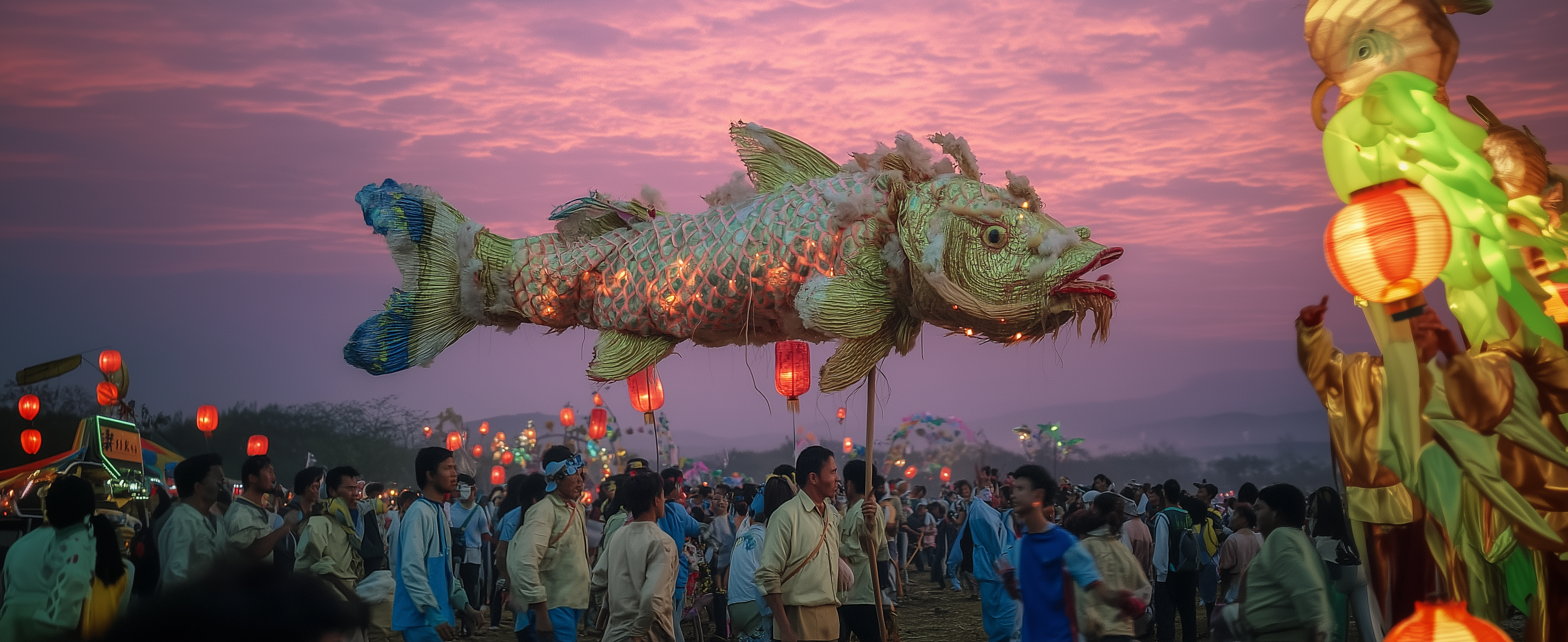
Chaque saison des vents, les habitants font danser d'immenses marionnettes-poissons dans les rues, guidées par les rafales. Les masques de Mārara protègent du sel, du soleil, et parfois des pluies torrentielles.

Each wind season, residents parade giant fish puppets through the streets, steered by sudden gusts. Mārara masks protect from salt, sun, and sometimes from the heaviest tropical rains.

Tournoi des Filets Chanceux Lucky Nets Tournament
Concour pêche

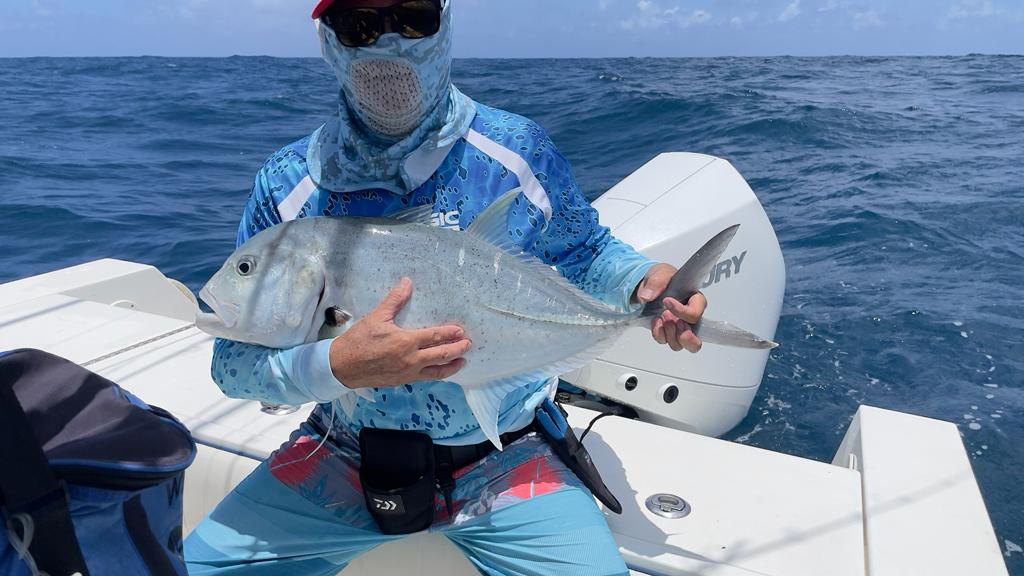
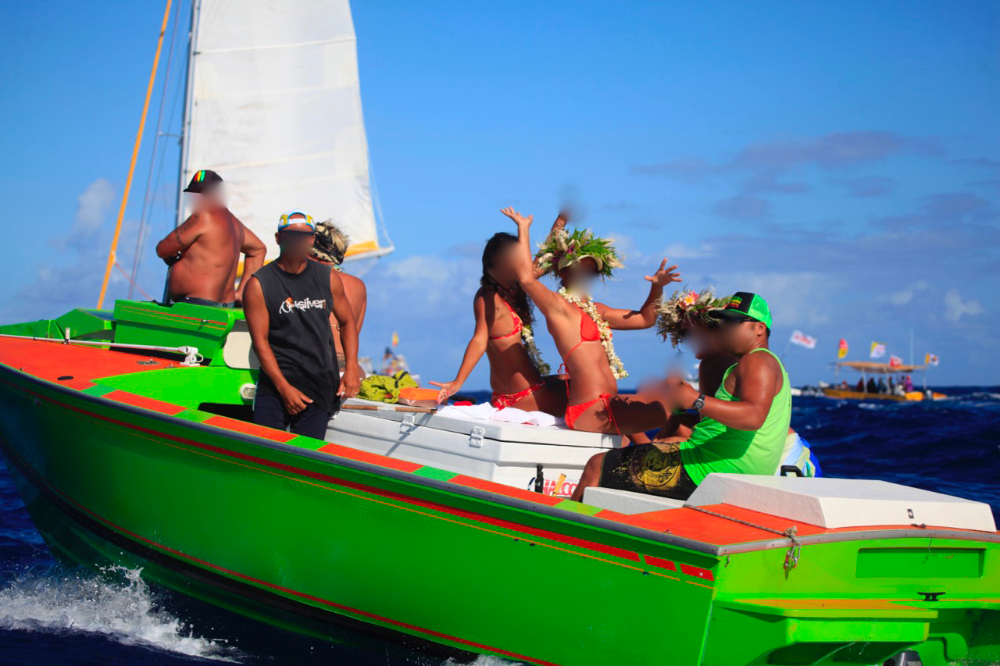
Chaque année, les habitants se retrouvent pour un grand concours de pêche sur les côtes de Mārara. Un événement festif où technique, chance et traditions se rencontrent.

Each year, locals gather for a large fishing contest along Mārara’s shores — a festive moment where skill, luck and tradition all meet.

Bringue Bringue
Bringue

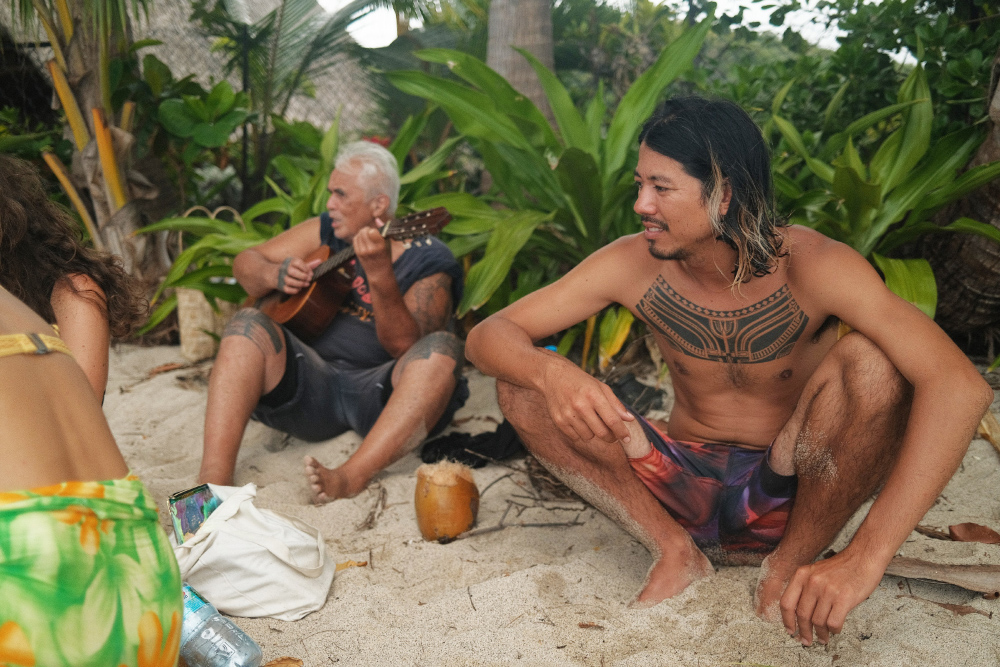
Chaque semaine, Marara s’anime au rythme de la Bringue : une jam spontanée où percussions, voix et danse se répondent dans une ambiance résolument locale. Ici, pas de scène ni de programme — la musique naît sur place, portée par l’énergie du quartier et l’esprit collectif. Bon à savoir : certaines Bringues peuvent changer de lieu au dernier moment (selon la météo et l’humeur du quartier). Demandez “où ça bringue ce soir ?” — on vous indiquera.

Every week, Marara comes to life to the rhythm of the Bringue: a spontaneous jam where percussion, voice and dance respond to each other in a resolutely local atmosphere. Here, there is no stage or program — the music is born on site, carried by the energy of the neighborhood and the collective spirit. Good to know: some Bringues can change location at the last minute (depending on the weather and the mood of the neighborhood). Ask “where does the bringue this evening?” — we will tell you.

Une balade en poti marara A walk in the poti marara
Une balade en poti marara

Juste une balade, version saplin : un poti mārara qui grince un peu, et une bouteille de rhum qui passe de main en main comme un micro.

Just a walk, version saplin: a mārara poti that creaks a little, and a bottle of rum that passes from hand to hand like a microphone.

Concours de sculptures de sable Sand sculpture contest
Concours de sculptures de sable

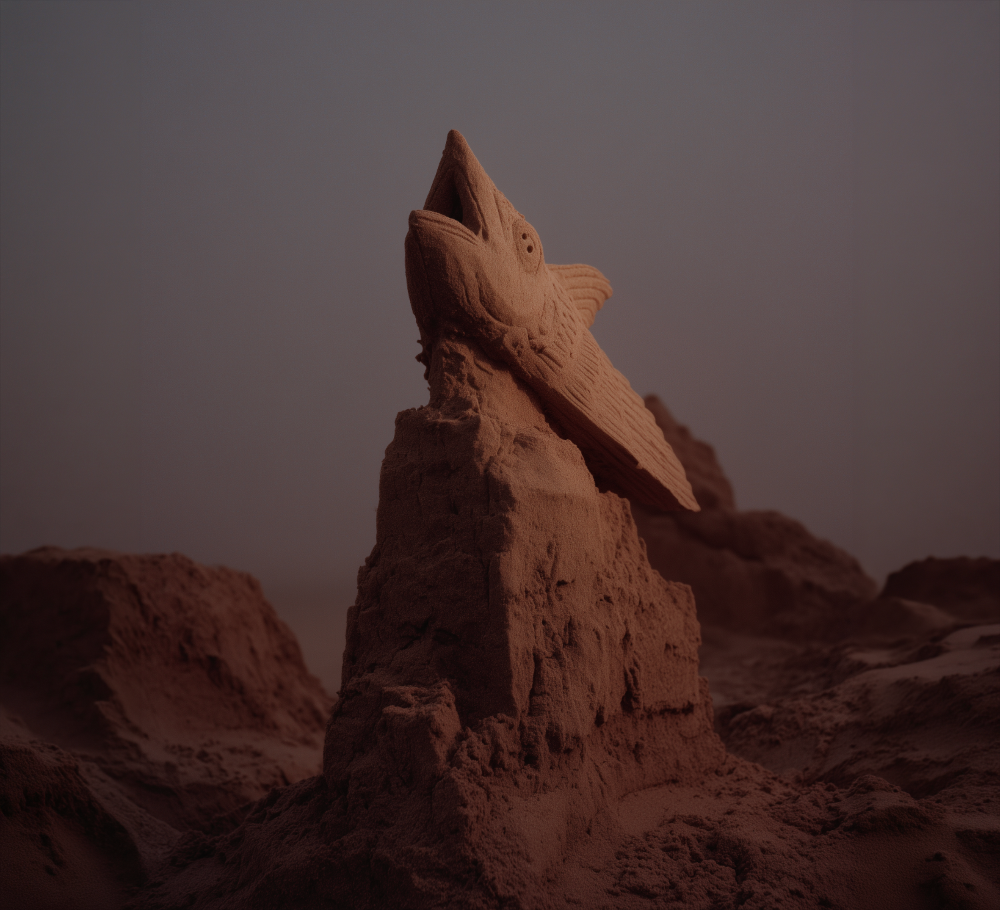
Chaque année, les plages deviennent des musées éphémères : poissons volants, nuages, pirogues et visages de dieux prennent forme dans le sable, avant d’être effacés par la marée.

Every year, the beaches turn into ephemeral museums: flying fish, clouds, canoes and god-like faces appear in the sand, before being erased by the tide.

À propos de Mārara & de 1515 About Mārara & 1515

Une île et une culture vivantes An island and a living culture

Mārara puise dans les traditions orales polynésiennes, les carnavals locaux, les anciennes cartes maritimes et l’esprit des grands voyages. L’île offre un ensemble de coutumes, de paysages et d’usages qui abordent des thèmes comme le dépassement de soi, les rapports humains, le déracinement, et les fêtes au bord de l’océan.

Mārara draws from Polynesian oral traditions, local carnivals, old sea charts and the spirit of long voyages. The island gathers customs, landscapes and practices that explore themes like transcendence, power relations, uprooting and seaside celebrations.

Venez découvrir sa géographie, ses rituels, ses habitants, ses saisons et ses lieux emblématiques.

Come discover its geography, rituals, inhabitants, seasons and emblematic places.

1515, guides officiels 1515, unofficial official guides

1515 est un collectif / groupe de musique qui compose la bande-son de Mārara et joue les guides touristiques pas très fiables. Entre documentaire, mise en scène et performance live, le groupe cartographie peu à peu l'île et invite d'autres artistes à y poser leurs propres repères.

1515 is a music collective that writes Mārara’s soundtrack and plays the part of not-so-reliable tour guides. Between documentary, staging and live performance, the group gradually maps the island and invites other artists to place their own markers.

Ce site peut pointer vers : bio du groupe, agenda de concerts, making-of, carnets de repérage, images de masques, extraits de textes... Tout ce qui contribue à faire exister Mārara sur Internet.

This site can point to the band’s bio, tour dates, making-of material, scouting logbooks, mask imagery, text excerpts… Everything that helps Mārara exist on the internet.